








A neutral, science-based look at how the most popular electrolyte mixes stack up, and how to pick the one that fits how you live.
Walk down any wellness aisle and you'll see a dozen packets all promising the same thing: better hydration. Cure, Liquid I.V., Gatorade, Nuun, LMNT, Ultima. They look like competitors for the same job. They aren't, exactly. Each one is engineered around a different idea of who's drinking it and why, and once you understand the handful of variables that actually matter, the right pick gets a lot clearer.
So instead of crowning a winner, here's what's really going on inside the packet, and how to read any label for yourself.
The science, in plain English
Hydration isn't just about water volume. It's about whether your body can hold onto and use the water you drink. That comes down to electrolytes, mainly sodium and potassium, plus the ratio between them.
- Sodium is the main driver of fluid retention. It's what helps your body absorb and keep water rather than pass it straight through. It's also the electrolyte you lose most in sweat.
- Potassium works on the other side of the equation, supporting fluid balance inside your cells. Most people under-consume it relative to sodium.
- A small amount of glucose can actually help. This is the principle behind Oral Rehydration Solution (ORS), the formula the World Health Organization developed to treat dehydration. A precise balance of sodium and glucose activates the gut's sodium-glucose cotransport system, pulling water across the intestinal wall more efficiently than water alone. The key word is small: ORS uses just enough glucose to switch on that mechanism, not enough to turn the drink into a soda.
The right amount of sodium depends entirely on what you're doing. An endurance athlete losing liters of sweat in the heat needs aggressive sodium replacement. Someone sipping at their desk does not, and would just be adding salt they don't need. The "ideal ratio" debate is really a "what are you using it for" debate.
That's the lens for everything below.
The lineup at a glance
Per serving, mixed as directed. Figures are from each brand's current labels (sources at the bottom) and can vary by flavor, format, and reformulation, so always check the package.
| Product | Sodium | Potassium | Sugar | Sweetened with | Electrolyte source | Format |
|---|---|---|---|---|---|---|
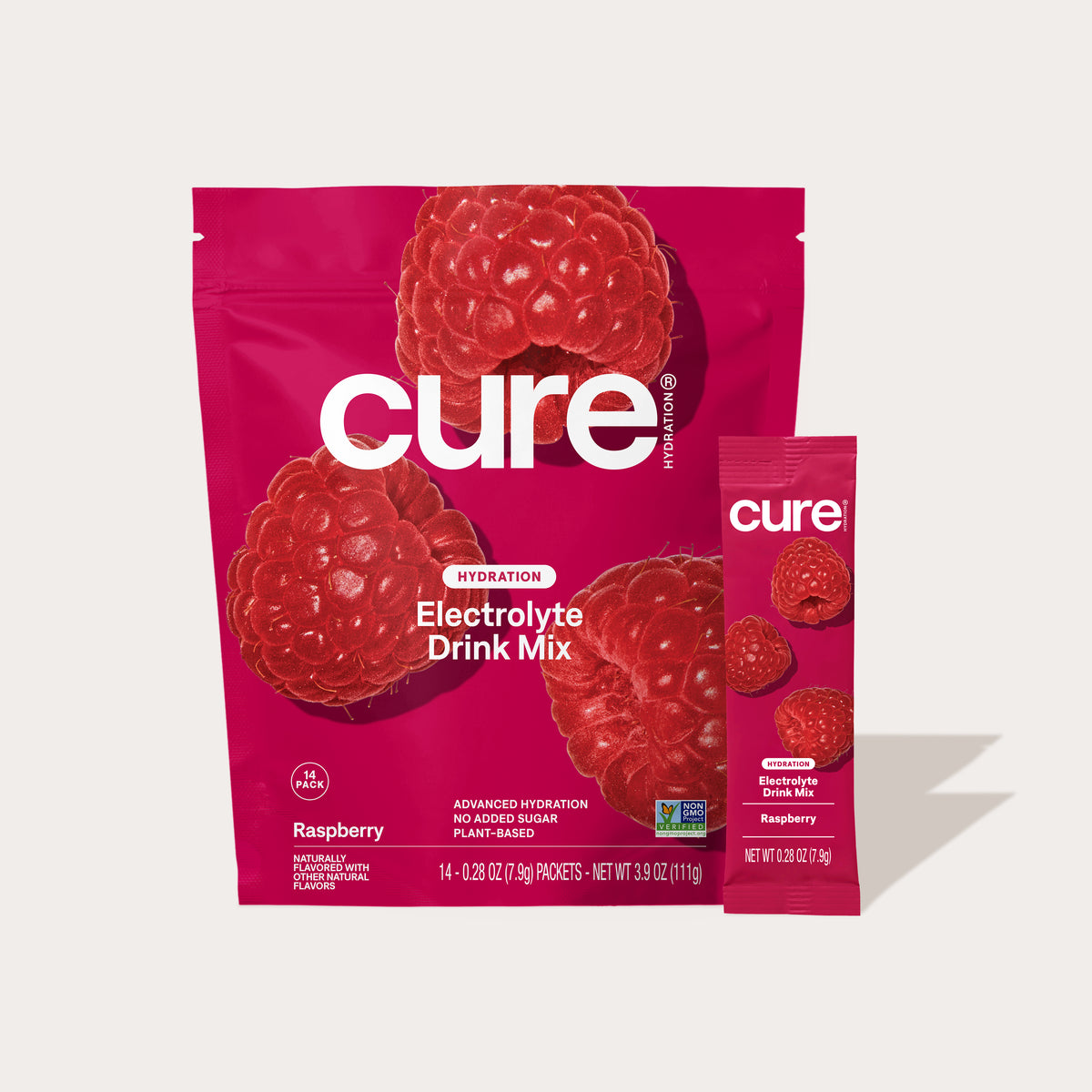
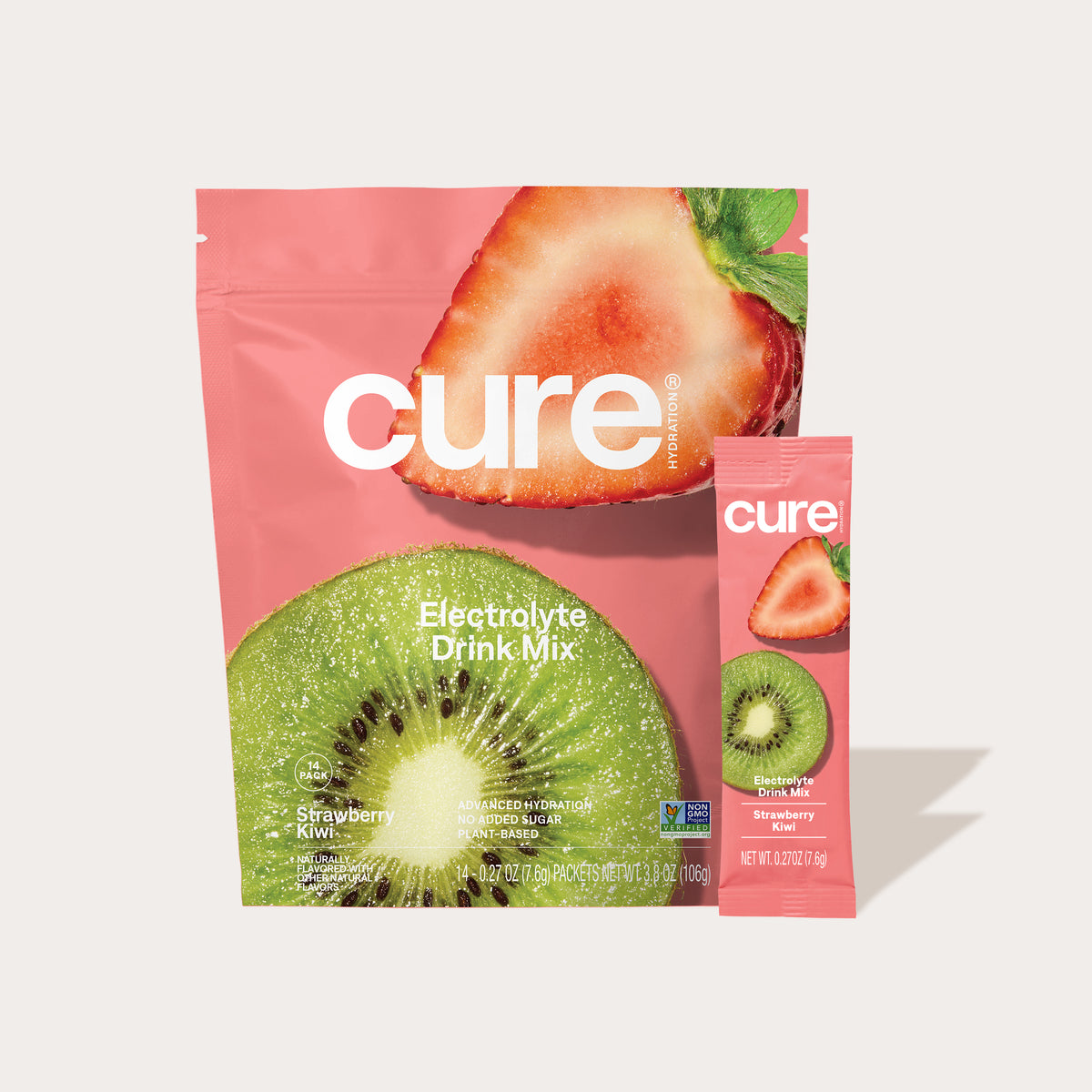
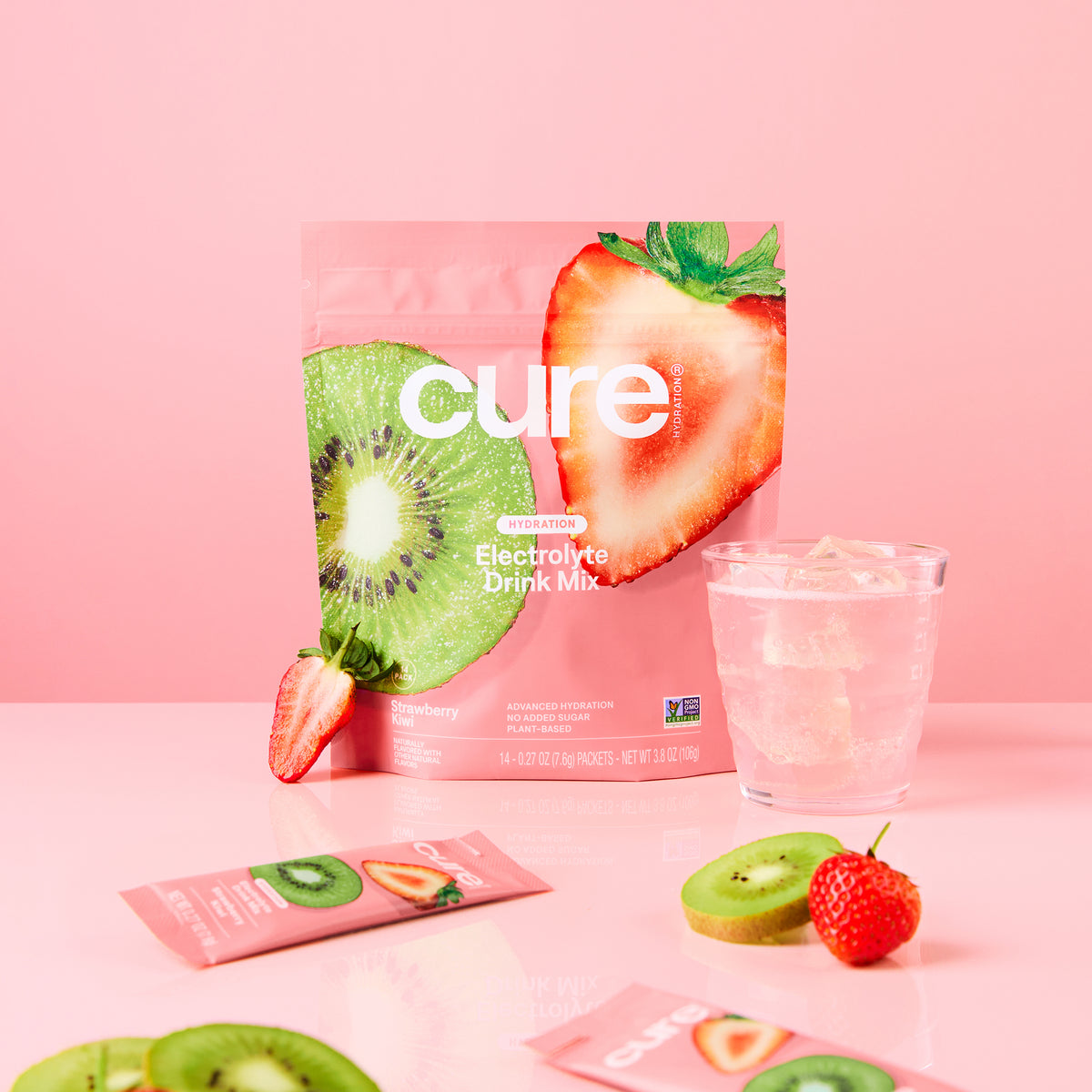
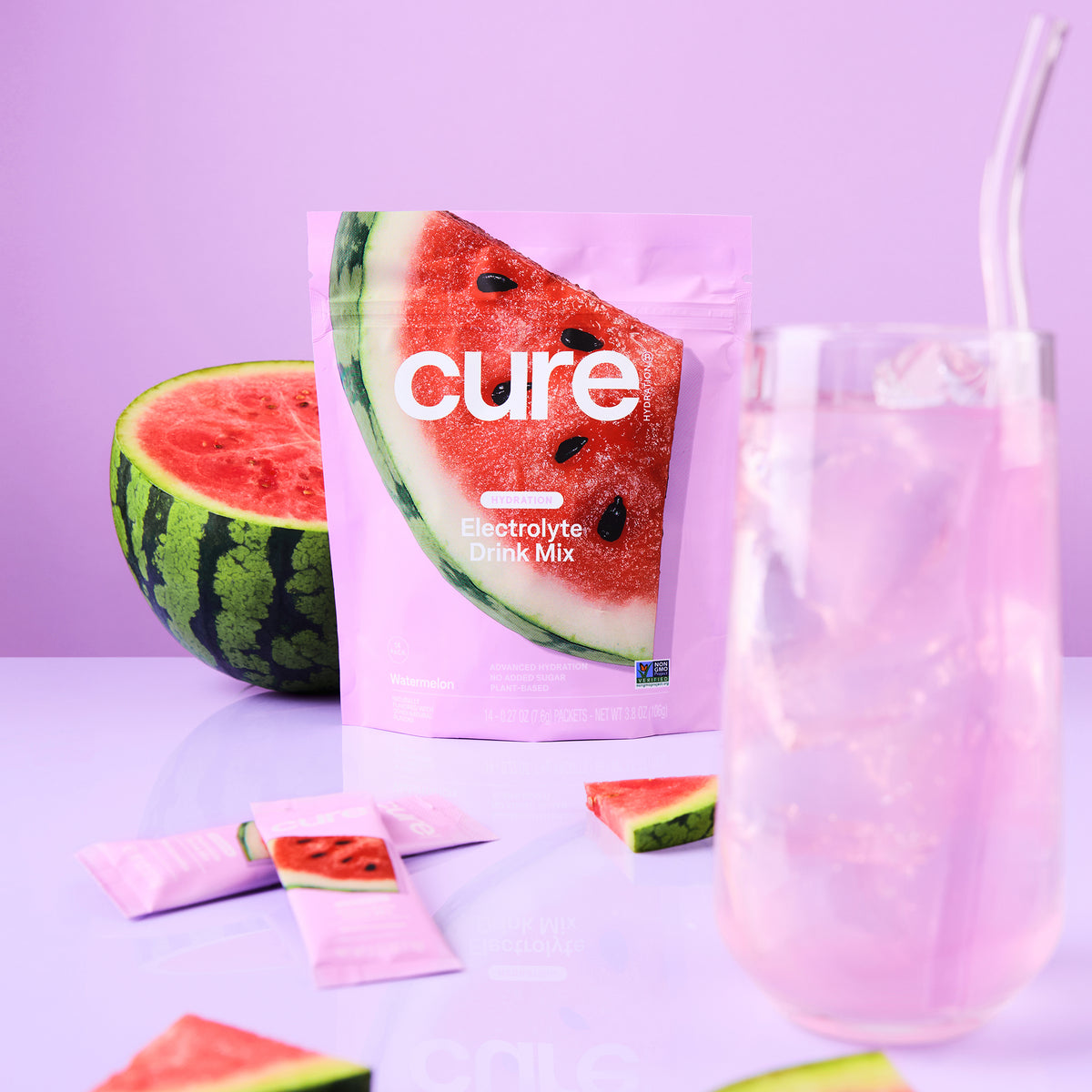
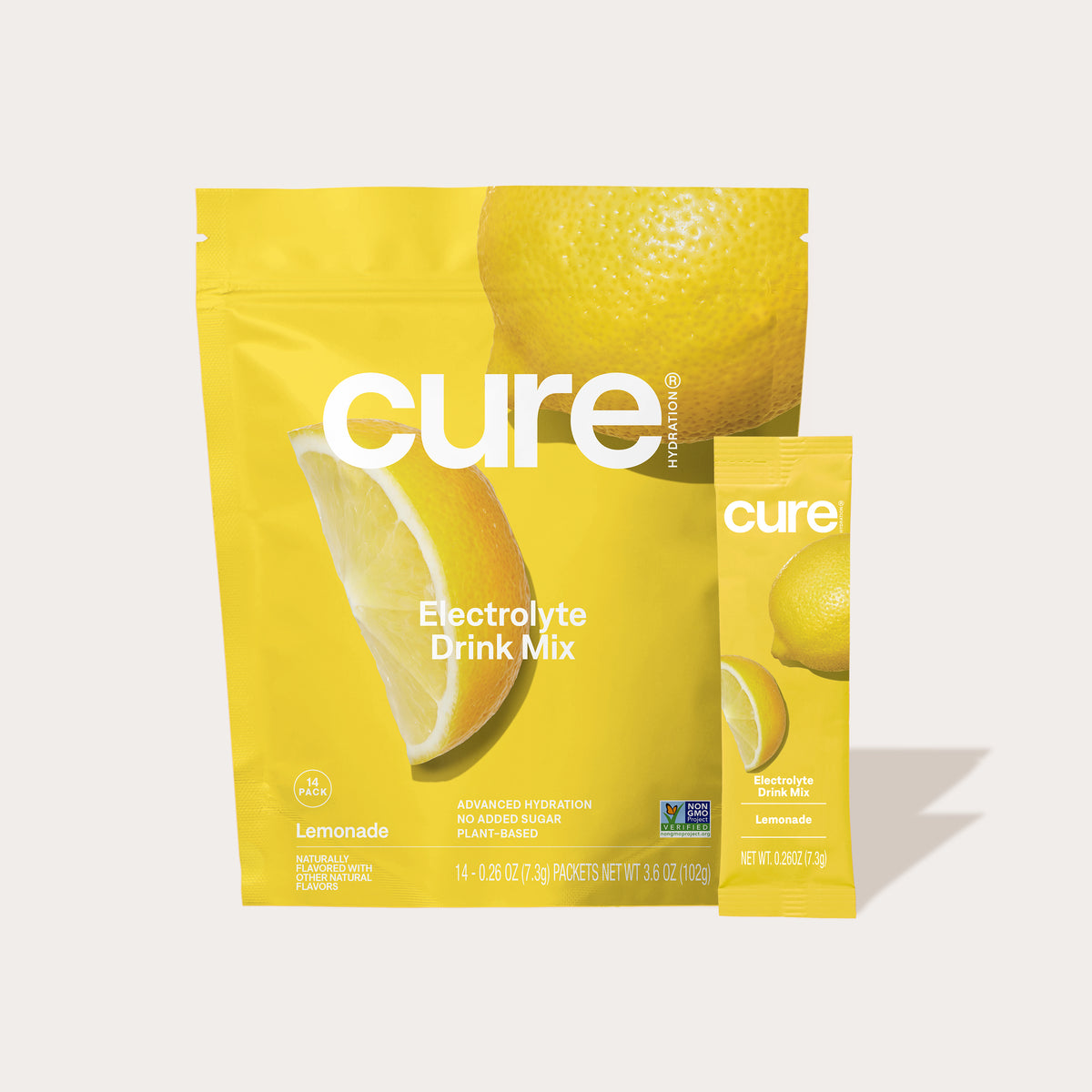
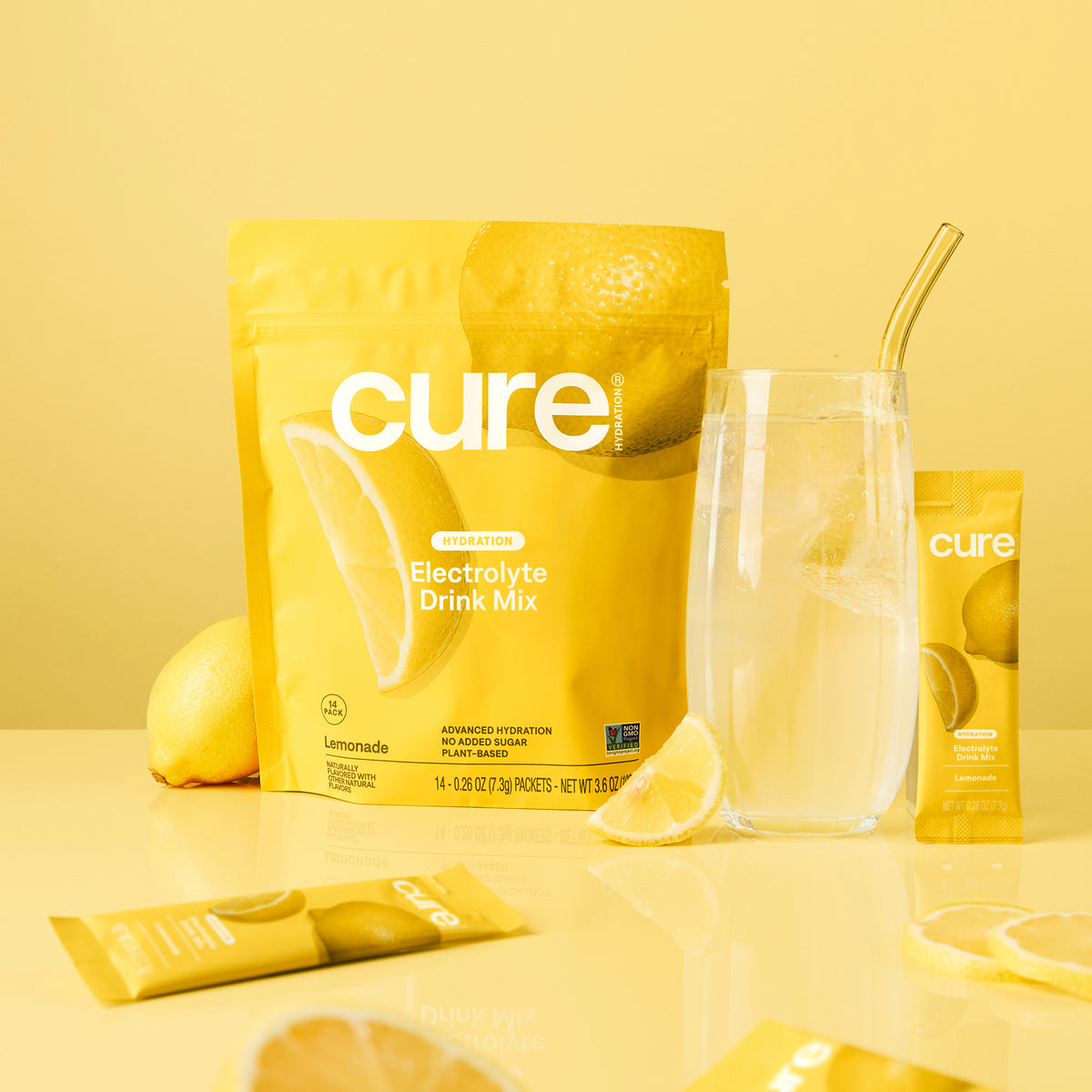
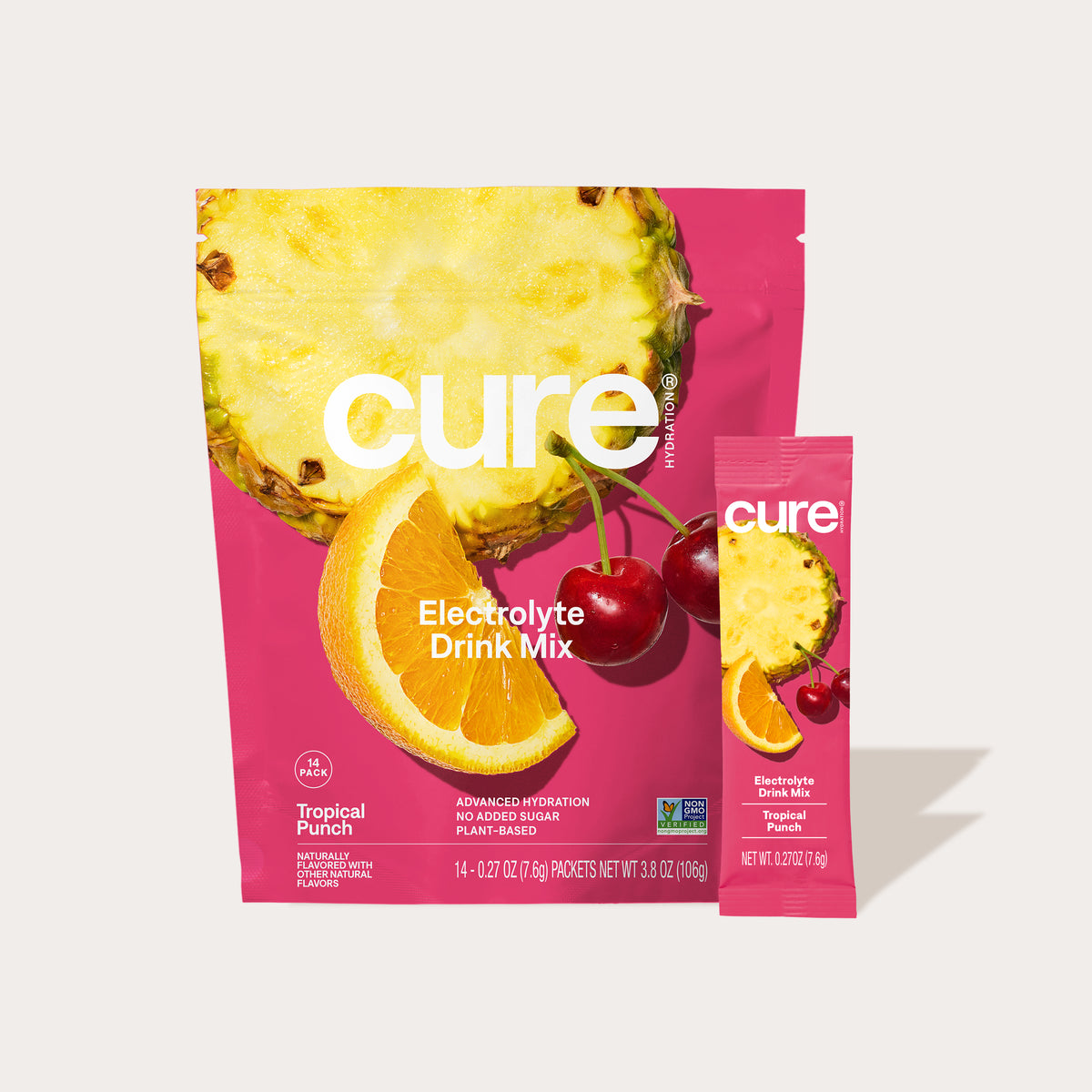
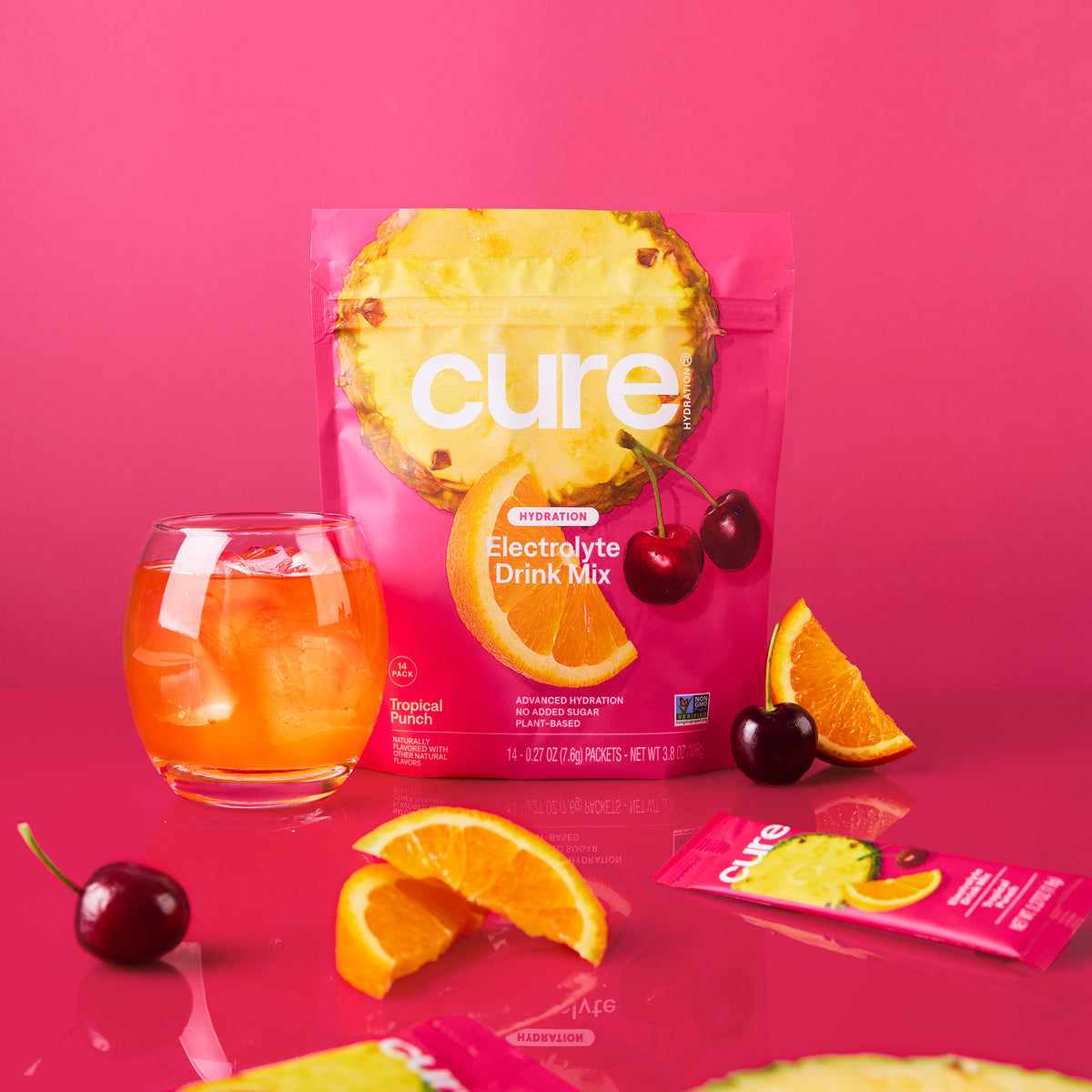
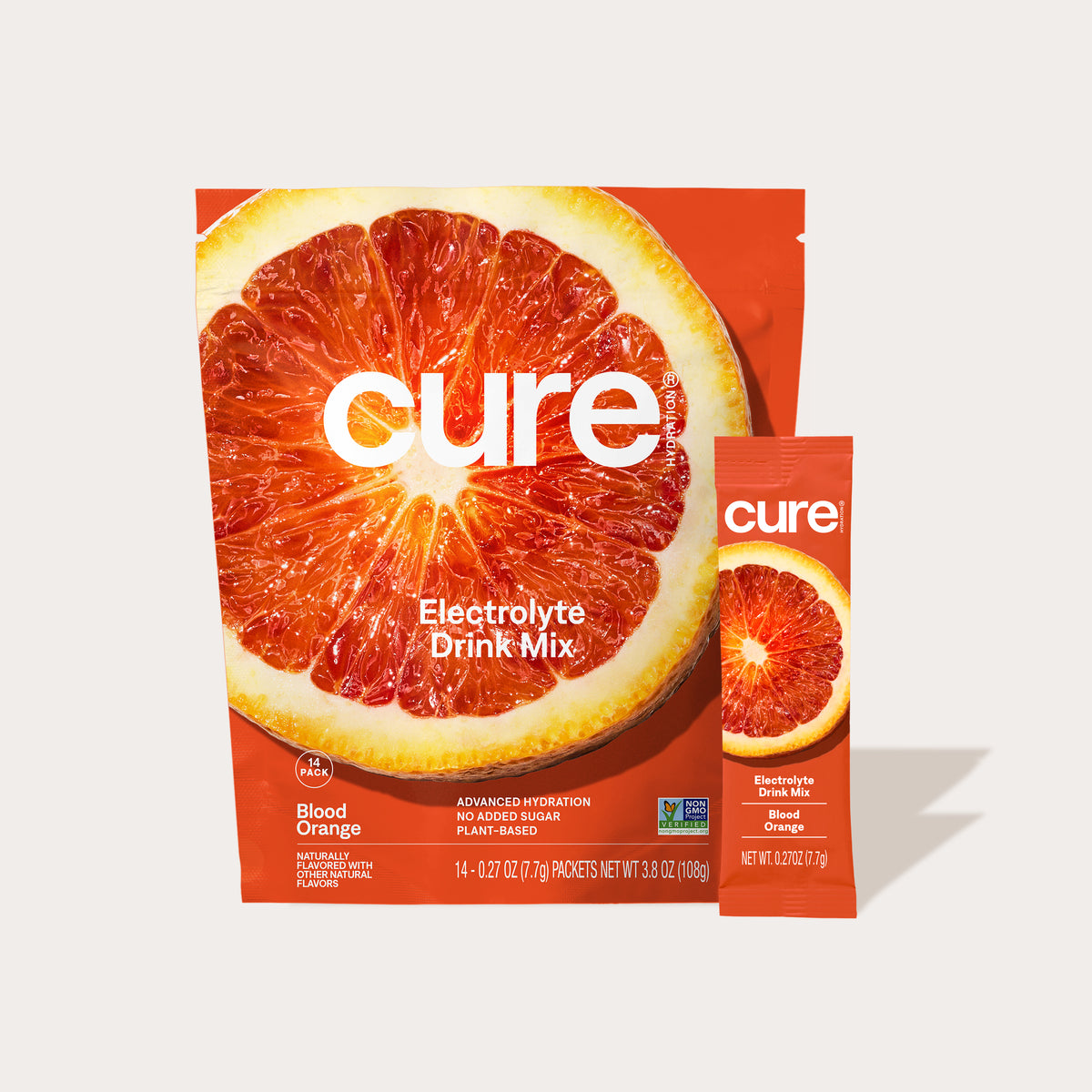
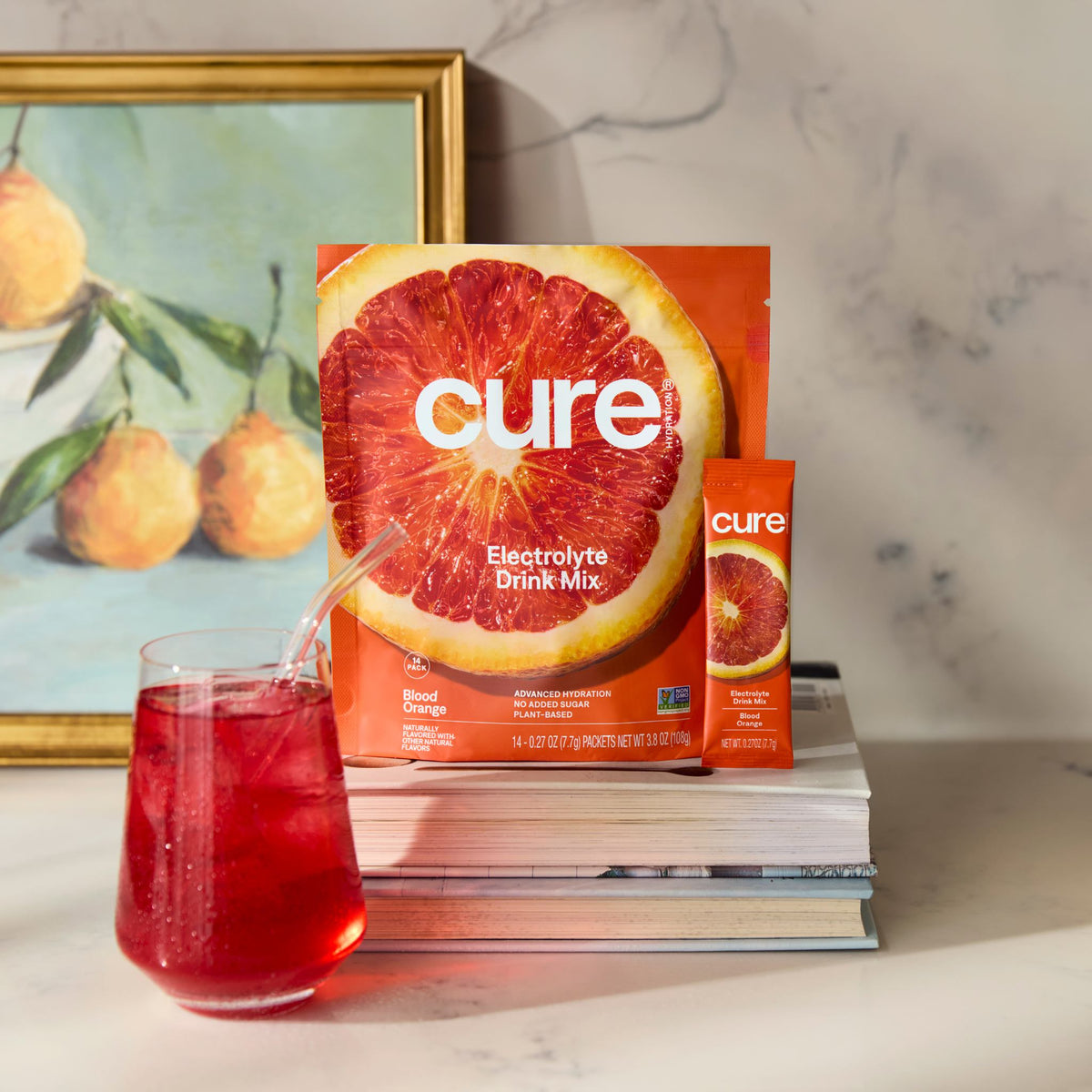
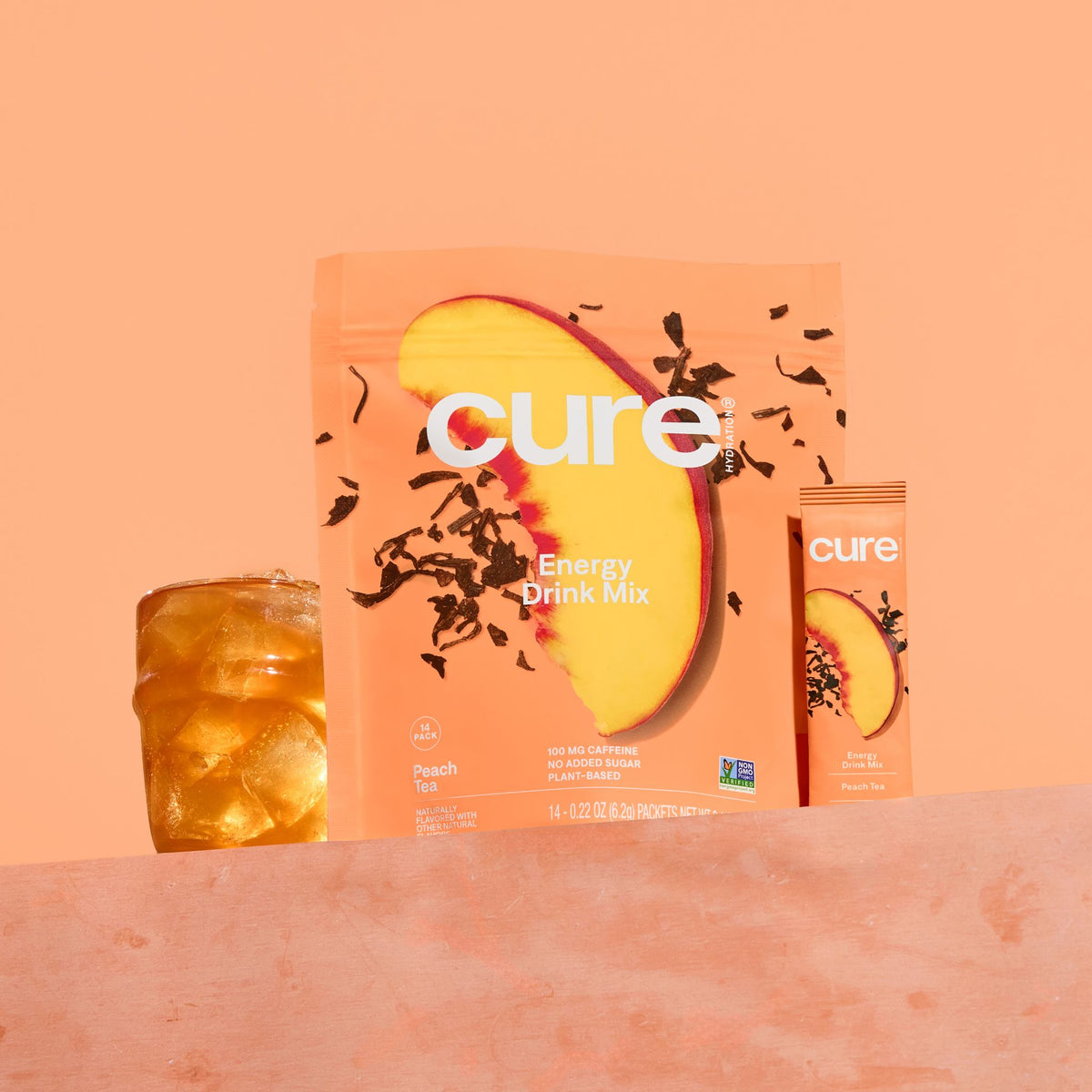
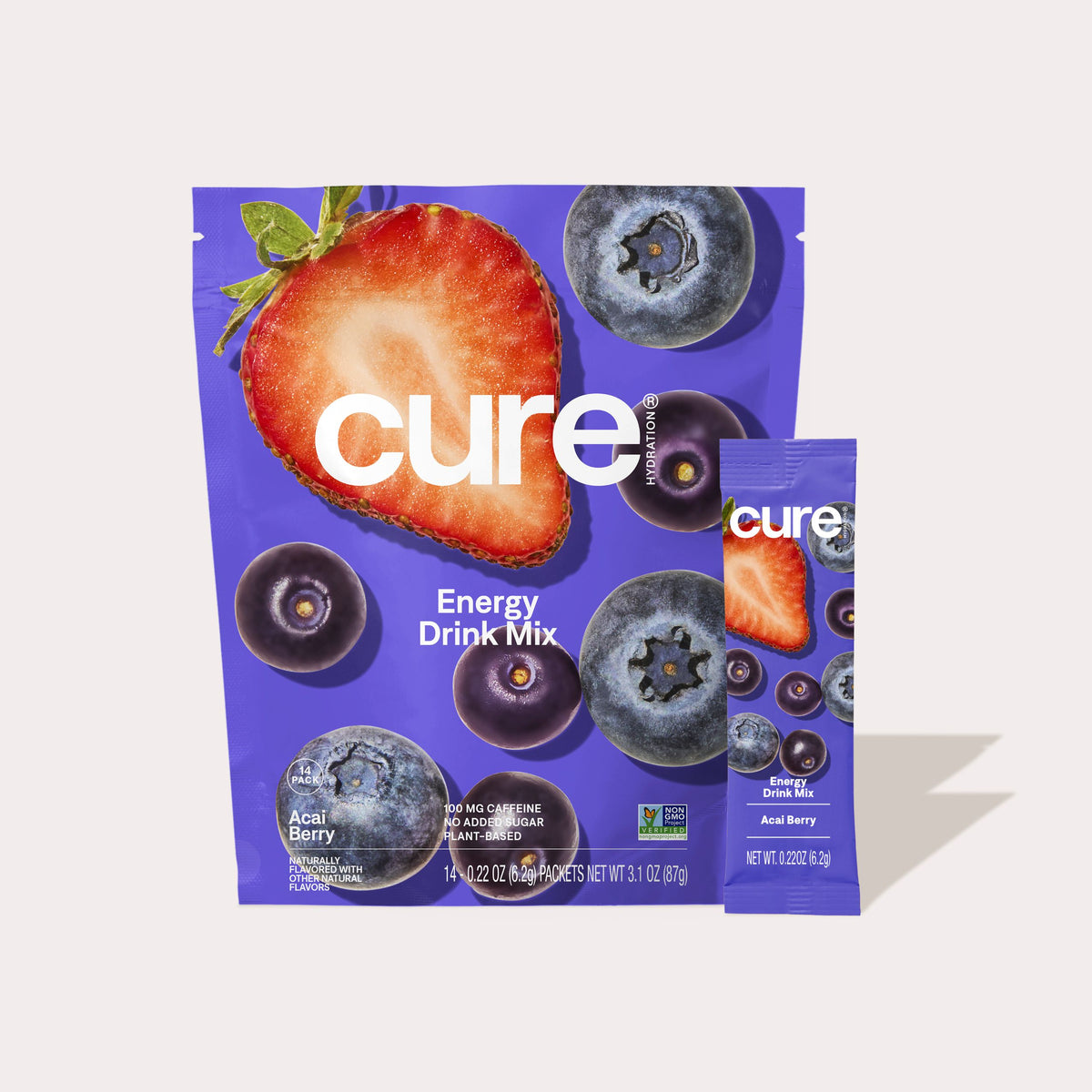
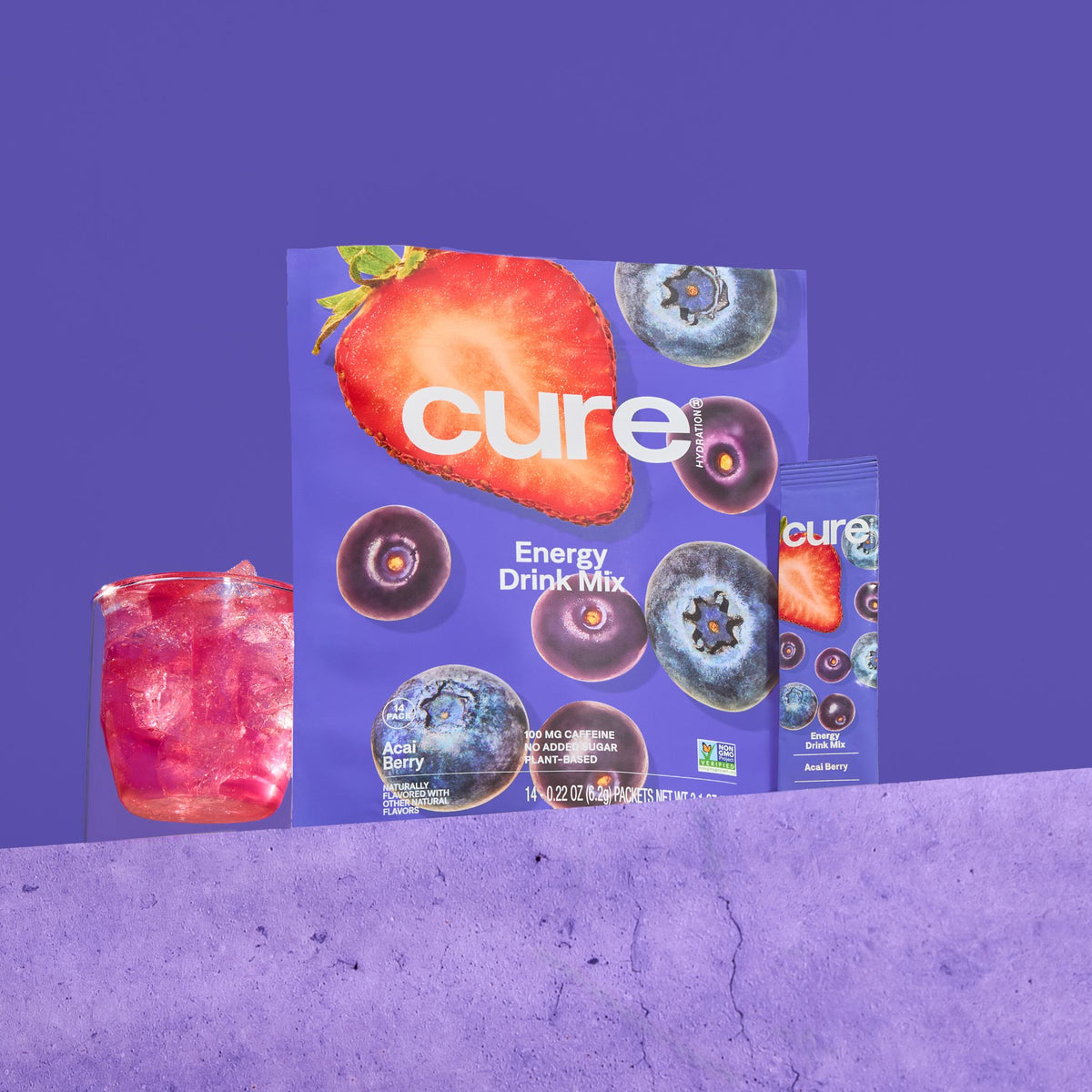
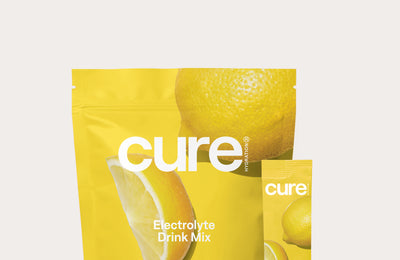
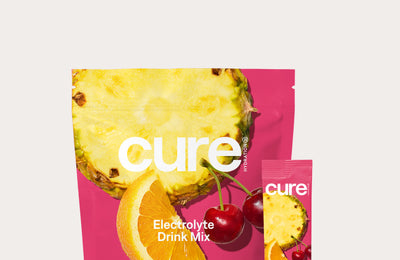
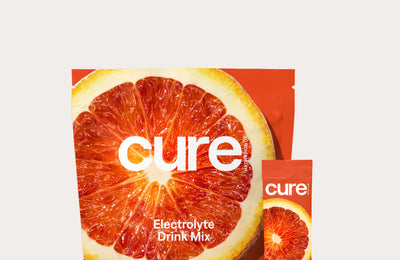
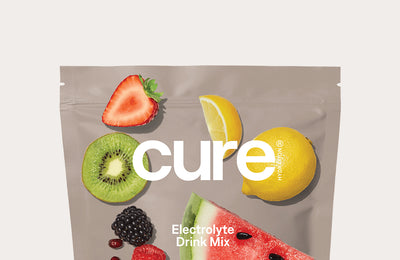
| Cure | 240mg | 300mg | 0g added (~4g from fruit) | Stevia + monk fruit | Coconut water, pink Himalayan salt, real fruit | Powder stick (16 oz) |
| Liquid I.V. (original) | ~500mg | ~370mg | 11g added | Cane sugar + dextrose (+ stevia) | Mined salt + sugar/dextrose | Powder stick (16 oz) |
| Liquid I.V. (sugar-free) | ~530mg | ~370mg | 0g | Allulose + stevia (+ amino acids) | Salt + amino-acid blend | Powder stick (16 oz) |
| Gatorade (Thirst Quencher) | ~150mg | ~35mg | ~21g added | Sugar + dextrose | Salt + monopotassium phosphate | Powder / bottle (12 oz) |
| Nuun Sport | 300mg | 150mg | 1g | Stevia (+ trace dextrose) | Mineral salts (+ Mg, Ca, Cl) | Effervescent tablet (16 oz) |
| LMNT | 1,000mg | 200mg | 0g | Stevia (flavored) | Salt, potassium chloride, magnesium | Powder stick (16–32 oz) |
| Ultima Replenisher | 55mg | 250mg | 0g | Stevia | Mineral salts (+ Mg, Ca, Cl, zinc) | Powder stick (16 oz) |
A few honest notes on reading this table:
- Gatorade and Liquid I.V. carry added sugar (about 21g and 11g per serving). For a long, intense workout, those carbs are functional fuel. For everyday sipping, that's a meaningful amount of added sugar. Both brands also offer lower- or zero-sugar versions (Gatorade Zero, Liquid I.V. Sugar-Free), but these alternatives include artificial sweeteners and flavors, sugar alcohols, and synthetic colors and dyes, which aren't always a better substitute if that's the only issue.
- LMNT sits at the far end on sodium at 1,000mg per stick, by design. That's roughly 4x most everyday mixes. Genuinely useful for athletes and low-carb dieters who lose a lot of sodium, more than most people need at a desk.
- Ultima sits at the opposite extreme at 55mg sodium, leaning heavily on potassium and magnesium. Light for everyday use, but not built to replace heavy sweat losses.
How much sodium do you actually sweat out? (And why more isn't always better)
Here's the part that "more electrolytes!" marketing tends to skip: you lose less sodium than you'd think in a day, and your regular diet is almost certainly already covering what you need. Most of us do not need help getting more sodium. We need help getting the right balance.
Yes, you lose sodium when you sweat. But for most everyday workouts, the amount is usually pretty modest. A 30 to 60 minute walk, spin class, strength session, or jog might cost you a few hundred milligrams of sodium. Even in studies where people exercised for 90 minutes, their sodium losses through sweat were often still lower than the amount of sodium they were already getting from a normal day of eating.
That matters because the average American already eats about 3,400 mg of sodium a day, well above the recommended limit of 2,300 mg. And most of that is not coming from someone aggressively salting their food. It is coming from packaged foods, restaurant meals, sauces, breads, snacks, and all the places sodium quietly shows up.
That's why a 1,000 mg sodium drink is not always necessary. For endurance athletes, heavy sweaters, or people spending hours in serious heat, higher sodium can make sense because they are losing more of it through sweat. That is also why the American Heart Association makes room for those exceptions when talking about sodium limits. But for most people, that is not the daily reality. If you are doing a normal workout or just hydrating throughout the day, you are probably already getting plenty of sodium from meals, snacks, packaged foods, and restaurant food. In that case, the goal is not to load up on more salt. It is to hydrate with more balance.
Potassium is the other side of the story. While sodium is easy to overdo, potassium is much harder for most people to get enough of, especially if they are not eating a lot of fruits, vegetables, beans, potatoes, and other whole foods.
So the real hydration question is not just, "How much sodium did I lose?" It is, "What does my body actually need more of?" For a lot of people, the answer is less about piling on more sodium and more about restoring balance with electrolytes like potassium.
That is where Cure fits in. With 240 mg of sodium and 300 mg of potassium per serving, Cure is made for the way most people hydrate day to day: through work, errands, school drop-off, workouts, travel, hot weather, and everything in between. If you're training for an Ironman or sweating through doubles in August, reach for the high-sodium stuff; that's what it's for. If you're hydrating through a normal active day and the workouts that come with it, you want balance, not a salt lick.
How to actually choose
- If you're sipping for everyday hydration and everyday workouts (mornings, travel, a desk, a 45-minute gym session, a glass of wine the night before): you want balanced electrolytes, not a sodium bomb, and ideally no added sugar. This is most people, most days. Cure, Ultima, and Nuun all live here. Cure leans on real food-based ingredients and a science-backed electrolyte blend; Ultima runs lowest on sodium; Nuun adds a little fizz.
- If you're a heavy sweater, endurance athlete, or on keto: you're losing serious sodium and want to replace it aggressively. LMNT is purpose-built for exactly this. Cure and the everyday mixes aren't designed to match that sodium load, and that's fine, because most people aren't sweating like that.
- If you're powering through a long, intense workout (90+ minutes): the carbohydrates in Gatorade or Liquid I.V. double as fuel, not just sweetness. That's the one scenario where the sugar is doing a job.
- If it's a sick day: you want the ORS principle, balanced electrolytes plus a touch of glucose, to rehydrate efficiently. Most of these qualify; the question is whether you also want clean ingredients while you're at it.
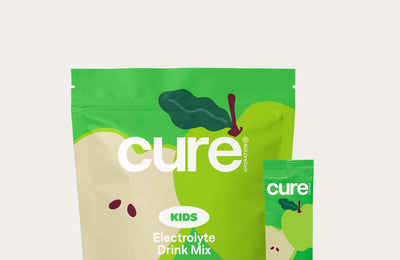
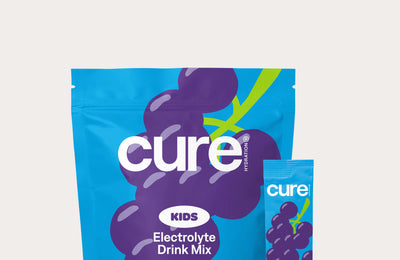
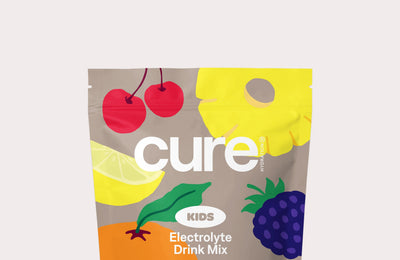
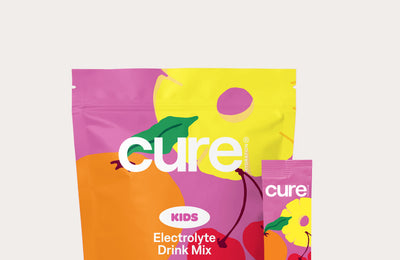
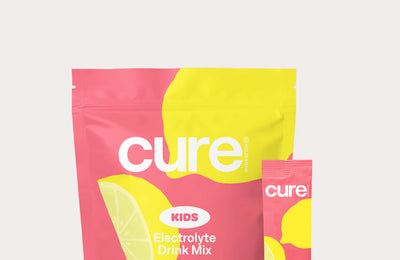
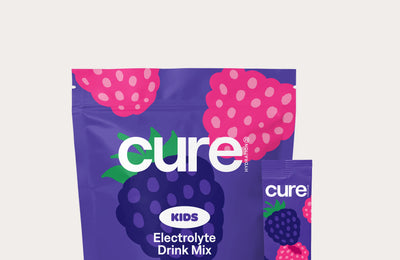
- If it's for the whole family, including kids: ingredient quality and no added sugar move to the top of the list, and not every brand here offers a kids-appropriate option.
Where Cure fits
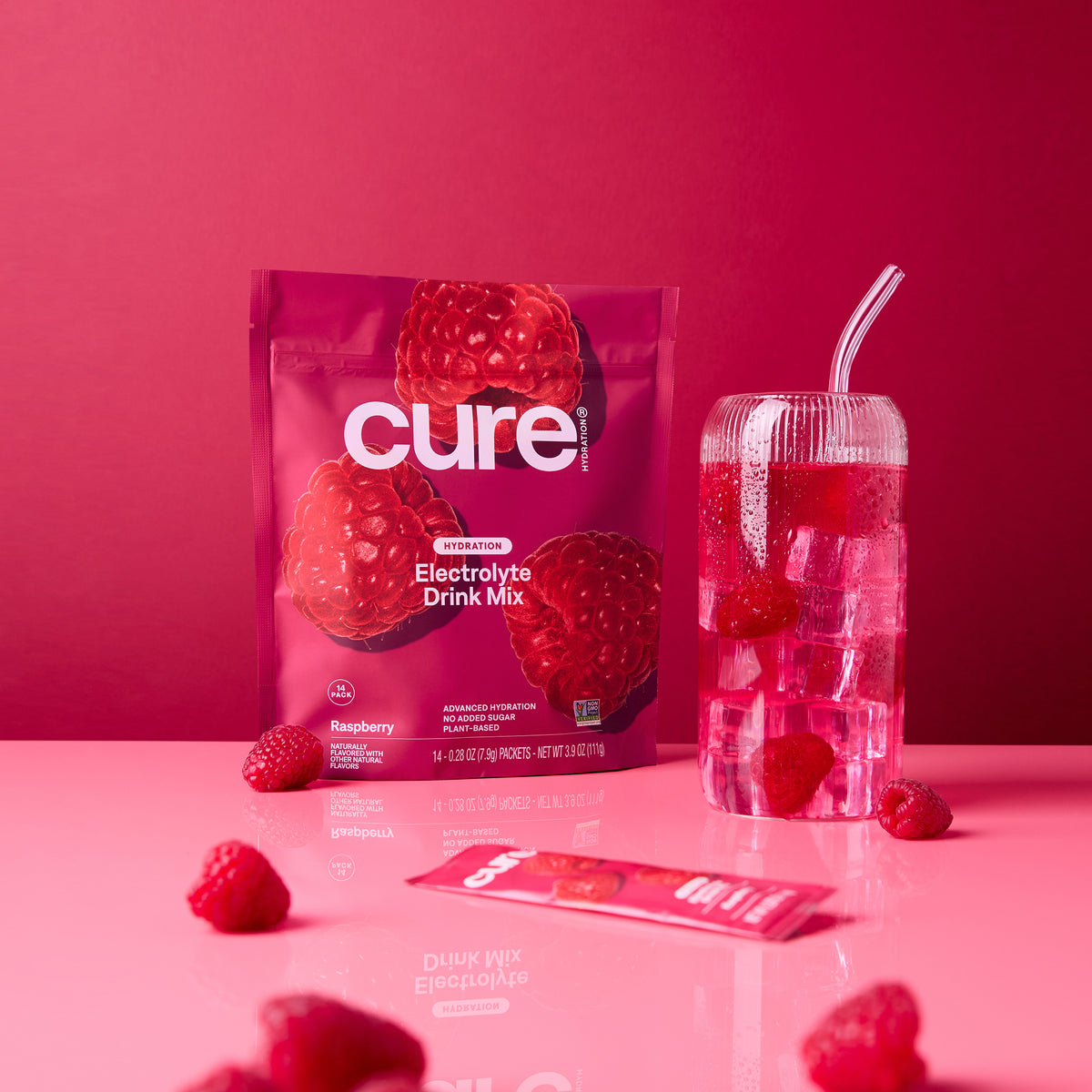
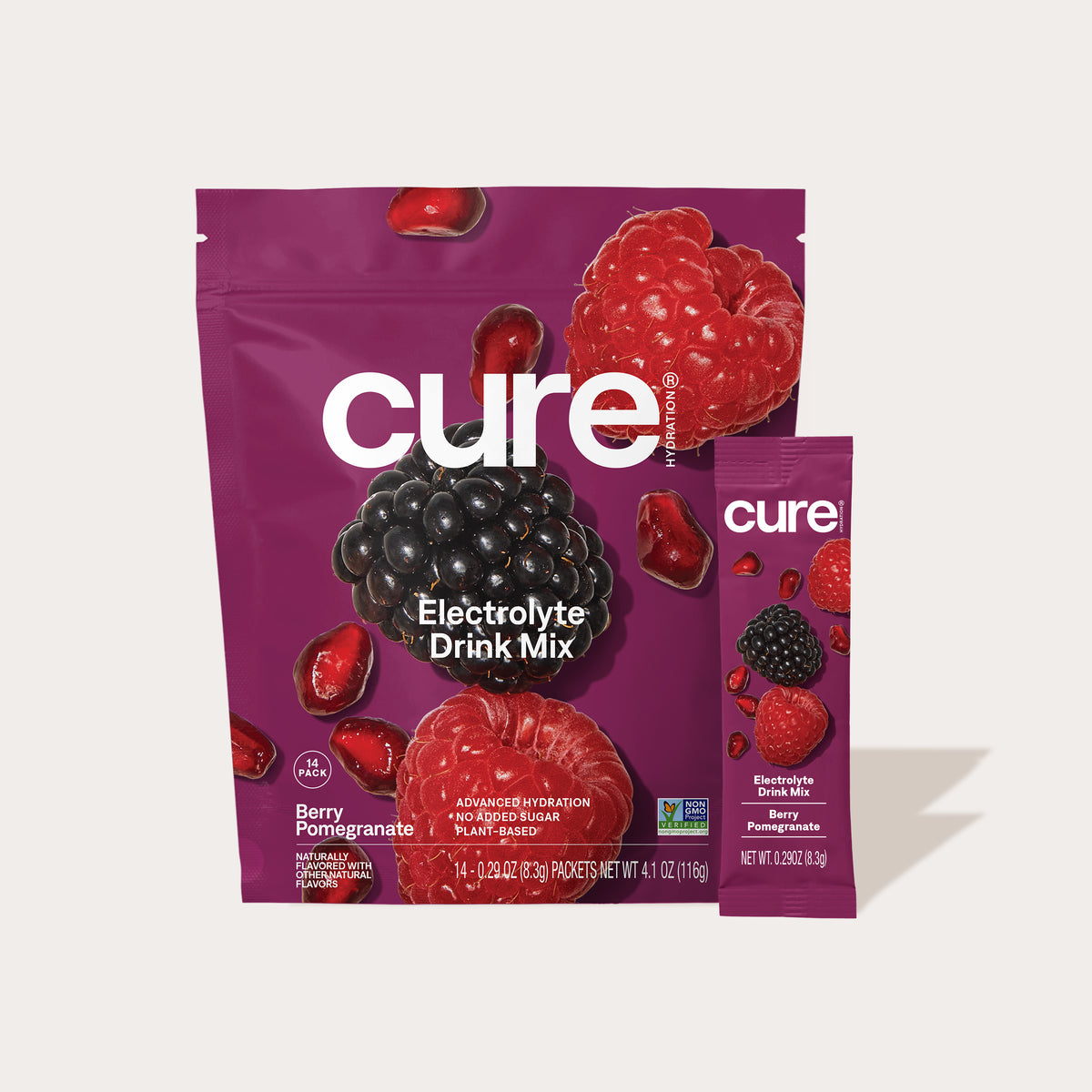
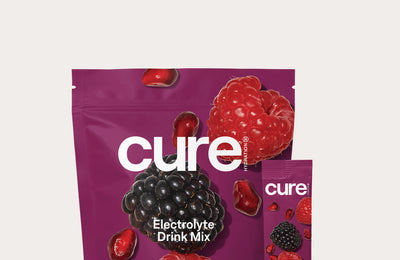
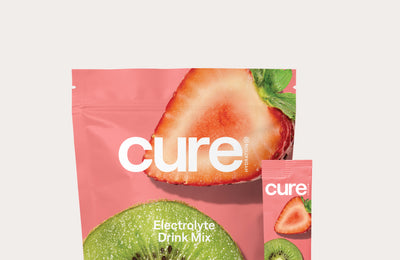
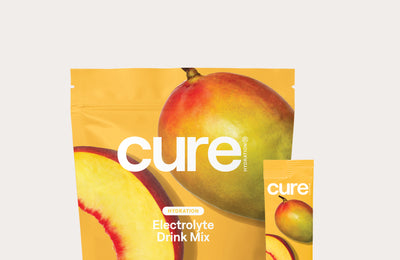
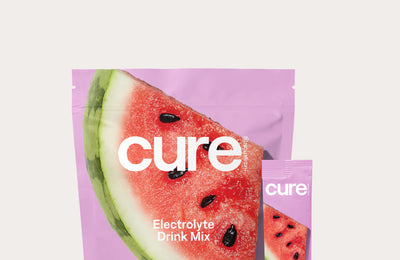
Cure is built for the everyday end of that spectrum. It's based on the same WHO Oral Rehydration Solution science as a sick-day rehydration drink, but made with real ingredients, coconut water, pink Himalayan salt, and real fruit, with no added sugar and nothing artificial. The result is balanced, food-first electrolytes that help you absorb water more effectively than water alone, in something you'll actually want to drink daily.
It's the right choice if clean ingredients and no added sugar matter to you, and if you want a drink that fits a morning, a flight, or a workout recovery without tasting like a melted popsicle. It is not engineered for 1,000mg sodium loading, and it doesn't need to be, because that's a different job for a different day.
The bottom line
There's no universal "best" electrolyte drink, only the best one for what you're doing. High sodium makes sense for heavy sweat, and carbs can help during long efforts. For most normal days, though, the label matters more than the marketing. Look at the sodium, potassium, sugar, and sweetener, and you'll know pretty quickly what kind of drink you're holding. Cure keeps it simple: real ingredients, no added sugar, 240 mg of sodium, and 300 mg of potassium per serving. Every day, clean hydration.
Sources
- Cure Hydration, product and ingredient information: https://www.curehydration.com/
- Liquid I.V., product ingredients: https://www.liquid-iv.com/pages/ingredients
- Gatorade, Thirst Quencher and Gatorade Zero powders: https://www.gatorade.com/
- Nuun, Nuun Sport tablets: https://nuunlife.com/products/nuun-sport
- LMNT, ingredients and electrolyte ratio: https://drinklmnt.com/pages/ingredients and https://science.drinklmnt.com/electrolytes/lmnts-electrolyte-ratios-explained
- Ultima Replenisher, product information: https://www.ultimareplenisher.com/products/orange-electrolyte-powder-drink
- World Health Organization, Oral Rehydration Solution background: https://www.who.int/
- Nuun electrolyte fluid-balance study (peer-reviewed): https://pmc.ncbi.nlm.nih.gov/articles/PMC7600513/
- Sweat sodium loss by exercise intensity (peer-reviewed): https://pmc.ncbi.nlm.nih.gov/articles/PMC6373370/
- FDA, Sodium in Your Diet (average intake vs. recommended limit): https://www.fda.gov/food/nutrition-education-resources-materials/sodium-your-diet
- CDC, About Sodium and Health: https://www.cdc.gov/salt/about/index.html
- American Heart Association, How Much Sodium Should I Eat Per Day (heavy-sweat exception): https://www.heart.org/en/healthy-living/healthy-eating/eat-smart/sodium/how-much-sodium-should-i-eat-per-day
- NIH Office of Dietary Supplements, Potassium (nutrient of public health concern, average intake): https://ods.od.nih.gov/factsheets/Potassium-HealthProfessional/